Cybernetics and the Future of Humanity
what contribution creative technologists will make to the development of cybernetics
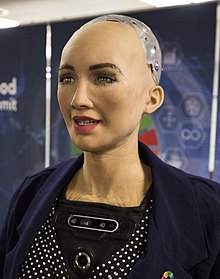
Science fiction has helped shaped our ideas of the future of humanity from movies such as I Robot, Blade Runner and various others and with the advancement of technology and cybernetics we are coming ever close to a future where cyborgs and artificial intelligence will become a part of our lives. A definition from MIT helps understanding and explain what cybernetics is; "linking biology and technology together in a cybernetic way—essentially ultimately combining humans and machines in a relatively permanent merger."(Kevin Warwick, 2018) The way in which Cybernetics will help shape our futures is currently in development, with the creation of AI robots there will be thinking robots with brains that are not that different from our own, however this will raise many ethical issues and debates, as there has always been a fear of technology.
(En.wikipedia.org, 2018)
A great current example includes Sofia, the first robot to be granted citizenship in Saudi Arabia. Since her production "MEPs have voted to propose granting legal status to robots, categorising them as "electronic persons" and warning that new legislation is needed to focus on how the machines can be held responsible for their "acts or omissions". (The Independent, 2018). Cybernetics does not only extend to cyborgs and artificial intelligence, there have been recent revelations in gene editing with technologies such as CRISPR Cas9 which is "a unique technology that enables geneticists and medical researchers to edit parts of the genome by removing, adding or altering sections of the DNA sequence. "(Yourgenome.org, 2018) This advancement in cybernetics will effect humanity and result in the cure of many diseases, opens doors to genetic modification and more. It is important for us as artists to be able to interface these new technologies in a way that will allow them to seamlessly integrate into society as it is our role to communicate these new technologies and science to the general public in a way that they can digest it.
HeARt is a an medical school learning tool enhancement that helps educate people through the use of augmented and virtual reality, this gives the user the opportunity to gain finer detail and understanding of our biology. Technologies are slowly being adopted into professional practices an example includes the use of Virtual Reality to train surgeons. This is where we as designers will interface these types of technologies so that they have a friendly, simple and sleek user interface. The advancements
Examples:
VR surgeon training
(YouTube, 2018)
HeARt
(YouTube, 2018)
Inspiration:

(YouTube, 2018)
HeARt is a an medical school learning tool enhancement that helps educate people through the use of augmented and virtual reality, this gives the user the opportunity to gain finer detail and understanding of our biology. Technologies are slowly being adopted into professional practices an example includes the use of Virtual Reality to train surgeons. This is where we as designers will interface these types of technologies so that they have a friendly, simple and sleek user interface. The advancements
Examples:
VR surgeon training
HeARt
Inspiration:
Comments
Post a Comment