History of Commons and Sharing Economies
The Evolution of Social Media and Contemporary Roles in Creative Industries

Social Media is used today in creative collaboration and I can talk about this through personal experience as many times I have found clients and clients have found me through my Instagram page, some of which I still currently maintain their websites. The reason as to why I use Instagram is so that my clients can match my work to a face, I have communicated with clients through Instagram as well as with other professionals in their respected fields. I also use LinkdIn to regularly speak to professionals and update my experiences as to where employers can see all my projects, jobs, personal portfolio, skills and more. It is a great way for a freelancer like myself to advertise myself. Social media has recently been on the rise when it comes to finding careers.
With the current undervalued attention on platforms such as Facebook and Instagram, it is easy to find your target audience and advertise directly towards them. This is a great way for any business to grow both their following and exposure within all industries not only the creative. The below example is from a conversation between me and one of my clients (name and image removed for privacy) through Instagram.

From an article from fstoppers on 'How social media is changing the creative industry' it stated "each person had to have "a following of at least 20k" — their words, not mine. But this is a direct example that having a following is, to some clients, an essential requirement."(Alexander, 2018) The larger your social media following, the larger audience that you will be able to influence, this could be from your work or advertising sponsorship's, thus providing more opportunities for you to capitalise on this new marketplace.
Ludology and Play: Gamification in Creative Collaboration and Share Economies
The use of gamification within the share economies has resulted in new ways for people to communicate with each other, for example Uber's use of star ratings to rate both their drivers and riders allows for a new type of goal and gamification of the whole process in order to provide a higher quality service. Both rides and drivers are generally respectful of each other and will go out of their way to ensure the other party had a pleasant experience, in return both parties would then grade each other on the quality of their service, providing for a ranking system, if you're ranked high you will be matched with higher quality drivers and cars and vice versa. Concepts from gaming such as micro-rewards would work well within real life practice and services as this is what gives the user short term incentive to keep playing, it also reassures them that they are doing the right thing as they are being rewarded for it, not only this but micro-rewards such as personal avatars allow for the experience to become more unique to the user and again focusing on user centred design, this also falls into place with the gaming industry. Someone who produces a game will generally want you to feel a certain type of way during different parts of the story line, this is the same principle however, extended into your real life.
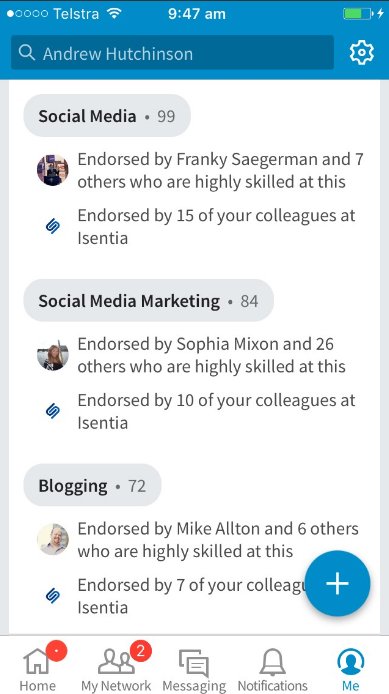
Another great example which is used within the creative industry is LinkedIn's skill system, the user is able to define the skill set that they have acquired and it is up to the other participants and users to vouch for this said skill, this use of gamfication and the more endorsements you get for a skill, the more likely a employer will notice this, as a result making you more employable if you have all these other industry professionals giving their word that you are good at what you say.
Crowd-Cloud Mataphors and Creative Commons/Ownership and Intellectual Property
If you create something digitally, you are automatically granted ownership of it in the UK under the Copyright, Designs and Patents Act of 1988, however how does this extend to the cloud, who has ownership of your data and creatives once they are uploaded to these gigantic 'cloud' servers.
A new mode of sharing data and protecting your intellectual property has been revolutionised recently with CryptoKitties defined as "a blockchain based video game developed by Axiom Zen that allows players to purchase, collect, breed and sell various types of virtual cats."(En.wikipedia.org, 2018) These virtual cats have fetched thousands of pounds online, as your breed different cats and find the rarer breeds in doing so, you are presented with the ownership of said cat, however how far does that ownership extend? With the cryptokitties, what you are paying for is an algorithm that determines the breed, type of cat, and other attributes of the cat, which are then put together by Axiom Zen in a visual form, however you do not personally own the graphic of the cat but rather the code that makes up the graphic of the cat. So how does this extend into the creative commons and industry? Imagine creating a digital art work which you did not want to be stolen, by using a similar block-chain methodology and algorithm it would be possible to make this digital art a one of one piece with the code being required to view it visually.
I believe as going into the creative industries this will have a significant impact on my career and when I am producing products or services for my clients, who will actually own the finished product/service, as result going into this new era of sharing and technology, it is even more vital to be cautious with the materials I will be using such as images, code, videos and more as they can all have legal implications at a later stage. It is also important for me to read between the fine prints of the terms and conditions which most simply overlook to see how my data will be shared and who has intellectual property rights once it has been upload to the cloud. And also it would be wise to be aware of the rights that your clients and you have regarding ownership over content you create, as this will definitely be a topic of concern in the future when freelancing for example.
The Commons
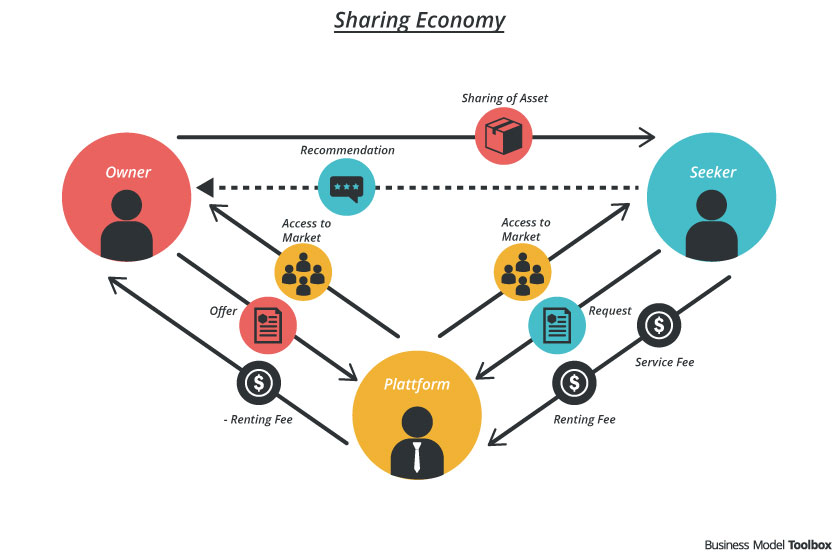
A milestone in the history of the commons is generally associated with the works of Garrett Hardin’s heavily cited essay “The tragedy of the commons” (1968) through out the essay he speaks of the participants of a common having their own self interests at heart and as a result the long-term demise of the shared common. Commons is defined as "a shared resource, which is co-owned and/or co-governed by its users and/or stakeholder communities, according to its rules and norms." (Commons Transition, 2018) "Hardin’s conclusion in relation to this dilemma was that the commons should either be privatised into parcels of land, or ownership should be transferred to the government, which would then bear the responsibility for regulating use of the land." (Bradley and Pargman, 2017) The 21st century's commons refer to the sharing economy which includes businesses such as uber, TaskRabbit where the participants provide the resources and the service, and the platform acts as the link between peer-to-peer contracts.
The Sharing Economy:
(Business Model Toolbox, 2018)
The sharing economy opens the doors to new economic opportunities, as previously privatised resources such as ones car, or bedroom are now added to the marketplace adding more quantity and quality to the spectrum, for example Uber allows their users to select their ride depending on the quality of the vehicle, their drivers rating, does the vehicle have auxiliary, essentially a user centred design which works both ways, as the drivers choose their hours and shifts and the consumer chooses their variables, and the platform brings both together. The video below does well at explaining in further detail the sharing economy.
(YouTube, 2018)
The Evolution of Social Media and Contemporary Roles in Creative Industries
Social Media is used today in creative collaboration and I can talk about this through personal experience as many times I have found clients and clients have found me through my Instagram page, some of which I still currently maintain their websites. The reason as to why I use Instagram is so that my clients can match my work to a face, I have communicated with clients through Instagram as well as with other professionals in their respected fields. I also use LinkdIn to regularly speak to professionals and update my experiences as to where employers can see all my projects, jobs, personal portfolio, skills and more. It is a great way for a freelancer like myself to advertise myself. Social media has recently been on the rise when it comes to finding careers.
With the current undervalued attention on platforms such as Facebook and Instagram, it is easy to find your target audience and advertise directly towards them. This is a great way for any business to grow both their following and exposure within all industries not only the creative. The below example is from a conversation between me and one of my clients (name and image removed for privacy) through Instagram.

From an article from fstoppers on 'How social media is changing the creative industry' it stated "each person had to have "a following of at least 20k" — their words, not mine. But this is a direct example that having a following is, to some clients, an essential requirement."(Alexander, 2018) The larger your social media following, the larger audience that you will be able to influence, this could be from your work or advertising sponsorship's, thus providing more opportunities for you to capitalise on this new marketplace.
Ludology and Play: Gamification in Creative Collaboration and Share Economies
The use of gamification within the share economies has resulted in new ways for people to communicate with each other, for example Uber's use of star ratings to rate both their drivers and riders allows for a new type of goal and gamification of the whole process in order to provide a higher quality service. Both rides and drivers are generally respectful of each other and will go out of their way to ensure the other party had a pleasant experience, in return both parties would then grade each other on the quality of their service, providing for a ranking system, if you're ranked high you will be matched with higher quality drivers and cars and vice versa. Concepts from gaming such as micro-rewards would work well within real life practice and services as this is what gives the user short term incentive to keep playing, it also reassures them that they are doing the right thing as they are being rewarded for it, not only this but micro-rewards such as personal avatars allow for the experience to become more unique to the user and again focusing on user centred design, this also falls into place with the gaming industry. Someone who produces a game will generally want you to feel a certain type of way during different parts of the story line, this is the same principle however, extended into your real life.
Another great example which is used within the creative industry is LinkedIn's skill system, the user is able to define the skill set that they have acquired and it is up to the other participants and users to vouch for this said skill, this use of gamfication and the more endorsements you get for a skill, the more likely a employer will notice this, as a result making you more employable if you have all these other industry professionals giving their word that you are good at what you say.
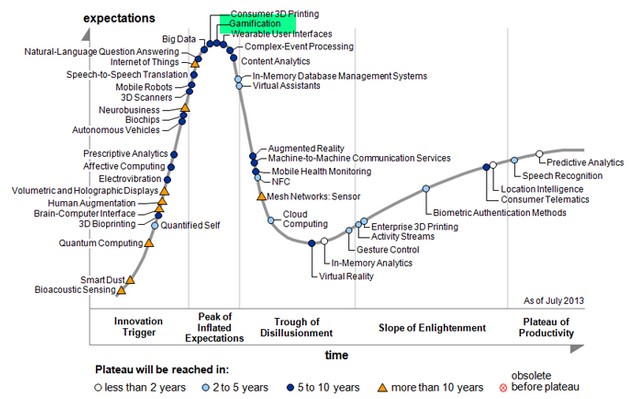
These types of systems have been on the rise in the last few years from an article I read it states "It is already being used in all kinds of domains, on- and offline, including recruitment, education, marketing, customer feedback and healthcare. One of the main goals of gamification is to engage people to fulfil a certain action."(Sohn, 2018) from the graph below we can see that gamification is at the peak of its inflated expectations, therefore within the next 5 - 10 years they predict that the plateau will be reached and it will no longer be a big thing, and adopted regularly within the way our systems work.
(Twitter.com, 2018)
(Gartner.com, 2018)
If you create something digitally, you are automatically granted ownership of it in the UK under the Copyright, Designs and Patents Act of 1988, however how does this extend to the cloud, who has ownership of your data and creatives once they are uploaded to these gigantic 'cloud' servers.
A new mode of sharing data and protecting your intellectual property has been revolutionised recently with CryptoKitties defined as "a blockchain based video game developed by Axiom Zen that allows players to purchase, collect, breed and sell various types of virtual cats."(En.wikipedia.org, 2018) These virtual cats have fetched thousands of pounds online, as your breed different cats and find the rarer breeds in doing so, you are presented with the ownership of said cat, however how far does that ownership extend? With the cryptokitties, what you are paying for is an algorithm that determines the breed, type of cat, and other attributes of the cat, which are then put together by Axiom Zen in a visual form, however you do not personally own the graphic of the cat but rather the code that makes up the graphic of the cat. So how does this extend into the creative commons and industry? Imagine creating a digital art work which you did not want to be stolen, by using a similar block-chain methodology and algorithm it would be possible to make this digital art a one of one piece with the code being required to view it visually.
I believe as going into the creative industries this will have a significant impact on my career and when I am producing products or services for my clients, who will actually own the finished product/service, as result going into this new era of sharing and technology, it is even more vital to be cautious with the materials I will be using such as images, code, videos and more as they can all have legal implications at a later stage. It is also important for me to read between the fine prints of the terms and conditions which most simply overlook to see how my data will be shared and who has intellectual property rights once it has been upload to the cloud. And also it would be wise to be aware of the rights that your clients and you have regarding ownership over content you create, as this will definitely be a topic of concern in the future when freelancing for example.
Comments
Post a Comment